

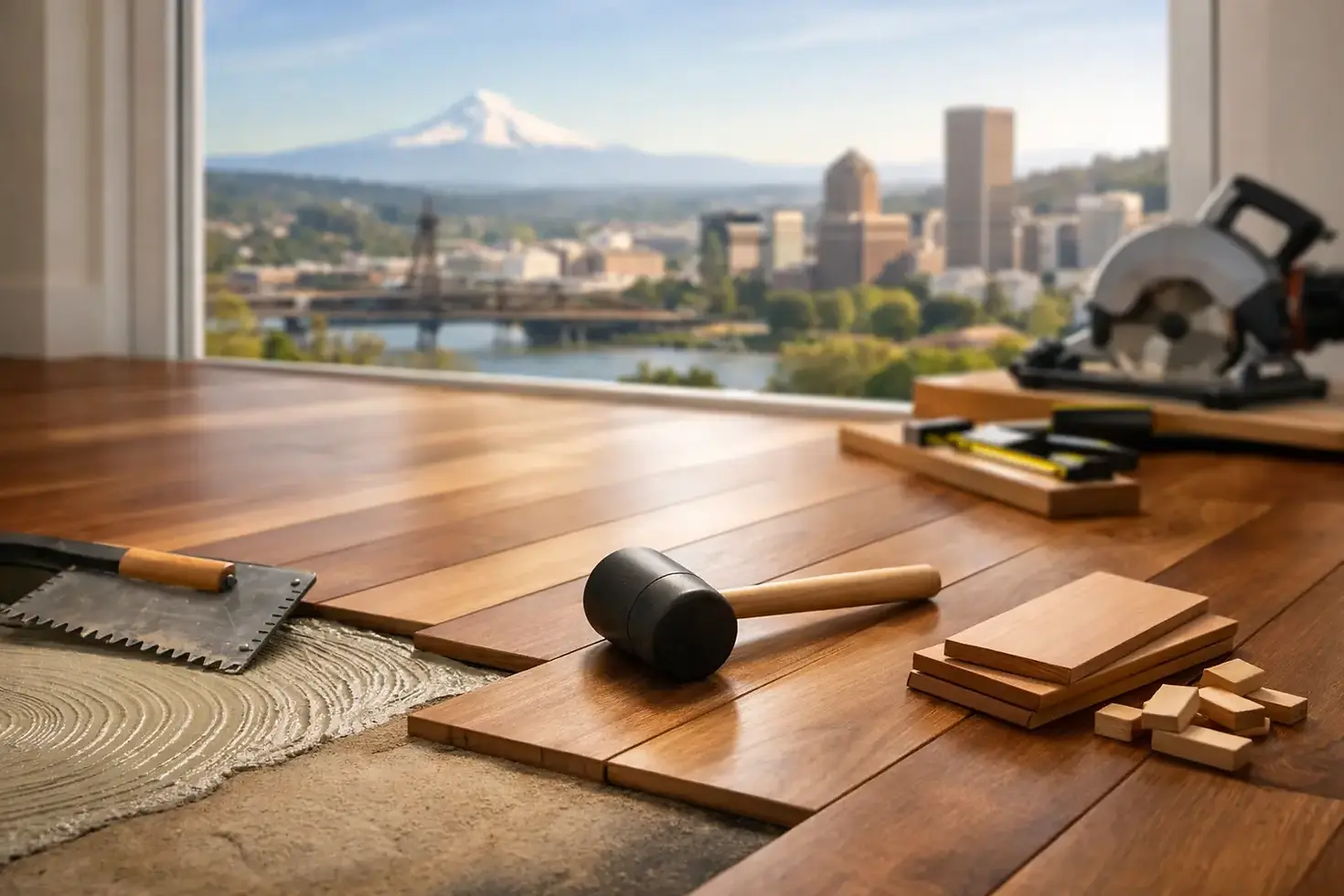
Hardwood Floor Installation Portland Guide

A hardwood floor can make a Portland home feel sharper, cleaner, and more valuable the minute it goes in. But hardwood floor installation Portland homeowners are happy with years later usually comes down to the work nobody notices at first - subfloor prep, moisture checks, layout planning, clean cuts, and a finish that holds up to real daily use.
That matters in this area. Portland homes range from older houses with uneven subfloors to newer builds where speed during original construction sometimes left behind imperfections. Add wet seasons, shifting humidity, pets, kids, and regular foot traffic, and hardwood stops being a simple cosmetic upgrade. It becomes a project where craftsmanship shows fast, for better or worse.
Why hardwood floor installation in Portland takes real planning
Hardwood is durable, but it is not forgiving of sloppy installation. If the floor is installed over an uneven base, boards can flex, squeak, separate, or wear unevenly. If moisture conditions are ignored, cupping, swelling, or gaps can show up after the job looks finished. If transitions and trim details are rushed, the whole room can feel off even when the material itself is high quality.
Portland creates a specific set of conditions that make prep especially important. Rainy months and damp crawlspaces can affect moisture levels. Older neighborhoods often have homes with settling, patched subfloors, or layered flooring from previous remodels. Even in a straightforward room, the installer has to account for expansion space, board direction, doorway transitions, stair edges, and how the new floor ties into the rest of the house.
This is why bargain pricing often turns into expensive correction work. Hardwood is not just nailed down and forgotten. Good installation protects the material you paid for.
What separates a professional hardwood floor installation Portland homeowners can trust
The biggest difference is discipline before the first board goes down. A professional crew does not rush past the evaluation stage. They look at the subfloor condition, check for soft spots or squeaks, measure moisture, and identify whether leveling or repairs are needed. That work is less exciting than choosing stain color, but it is what keeps the floor stable.
Layout also matters more than many homeowners expect. Board direction changes how large or narrow a room feels. Starting from the wrong wall can create awkward slivers at visible edges. In open layouts, consistency from one space to the next makes the house feel intentional. In older homes, straight lines are not always simple, because the house itself may not be perfectly square.
Then there is the finish work. Clean cuts around vents, cabinets, and jambs make the floor look built in rather than fitted around obstacles. Proper spacing at walls allows seasonal movement. Well-executed trim and transitions create a finished look without obvious gaps or patchwork.
A clean job site is part of quality too. Flooring work creates dust, debris, noise, and disruption. Homeowners should not have to accept a chaotic process just because the end result matters. Good crews protect surrounding surfaces, manage dust as much as possible, and keep the project moving in an organized way.
Choosing the right hardwood for your home
Not every hardwood floor is the right fit for every room or household. Solid hardwood is a strong option when you want a traditional wood floor that can be refinished multiple times over its lifespan. It offers long-term value, but it can be more sensitive to moisture conditions and may not be the best choice for every below-grade area or every home with fluctuating humidity.
Engineered hardwood gives homeowners a real wood surface with a layered core designed for improved stability. In many Portland homes, that added stability can be a practical advantage, especially where moisture swings or subfloor conditions make solid wood less ideal. It is still hardwood, but the performance profile can be better suited to certain applications.
Species and finish matter too. Softer woods can show dents faster in high-traffic homes. Darker finishes can look rich and dramatic, but they may highlight dust and scratches more easily. Matte and low-sheen finishes tend to hide everyday wear better than high gloss. For families with pets or active households, durability often matters more than chasing the most dramatic showroom look.
This is one of those it-depends decisions. The best floor is the one that matches how you live, not just what photographs well.
The installation process homeowners should expect
A quality hardwood flooring project usually starts with an on-site evaluation and a clear scope of work. That includes measuring the space, discussing material options, reviewing transitions into adjacent rooms, and identifying any repair needs before installation begins. Honest communication at this stage prevents surprises later.
Subfloor preparation
This is where many flooring jobs are won or lost. The existing floor may need removal, the subfloor may need repair, and low or uneven areas may need correction. If there are squeaks, loose sections, or signs of moisture intrusion, they should be addressed before hardwood is installed. Covering problems does not solve them.
Acclimation and moisture control
Wood needs time to adjust to interior conditions before installation. Moisture readings in both the flooring material and the subfloor help reduce the risk of movement after the project is complete. In Portland, this step should never be treated as optional.
Installation and layout
Once prep is complete, boards are installed according to the planned layout. This includes maintaining proper expansion gaps, keeping rows straight, staggering seams correctly, and making accurate cuts around room features. Experienced installers are constantly checking alignment because small errors grow quickly across a room.
Trim, transitions, and final cleanup
The finishing stage is what gives the floor a complete, professional appearance. Thresholds, baseboards, shoe molding, and stair details should look intentional, not improvised. Cleanup should be thorough enough that the new floor feels ready to live on, not like the homeowner inherited the final stage of the job.
Common problems that come from shortcut work
Poor hardwood installation tends to reveal itself in familiar ways. Gaps that open too quickly, hollow spots underfoot, boards that squeak, uneven edges, sloppy trim lines, and premature wear are all signs that something in the process was rushed or ignored.
Sometimes the issue is obvious right away. Sometimes it shows up after one wet season or one dry spell. That delay is what makes low-quality work frustrating. The floor can look acceptable at handoff and still fail under normal living conditions because basic standards were skipped.
Homeowners in Portland who are comparing bids should pay attention to what is and is not included. A lower price can reflect fewer prep steps, lower-grade materials, less protection for the home, or a weaker finish standard. That does not always show up on a simple estimate line item, but it shows up in the result.
How hardwood compares to other flooring options
Hardwood remains a strong choice because it brings warmth, resale appeal, and longevity that many materials struggle to match. It can elevate both traditional and modern interiors, and when properly installed, it holds up well over time.
That said, it is not automatically the right answer for every space. In some homes, luxury vinyl plank may make more sense for utility-heavy areas, households with large dogs, or rooms with higher moisture exposure. Tile can outperform wood in bathrooms or certain entry areas. The right contractor should be honest about those trade-offs instead of pushing one material everywhere.
For living rooms, bedrooms, hallways, dining areas, and many full-home updates, hardwood is still one of the best long-term investments a homeowner can make when the installation quality is there to support it.
What to look for before hiring a flooring contractor
Look past the sales pitch and pay attention to process. A reliable contractor should talk clearly about prep, moisture, material performance, transitions, cleanup, and timeline. If the conversation focuses only on price and how fast the crew can start, that is usually not a good sign.
You also want a contractor who respects the home while the work is happening. Clean containment, organized staging, and clear communication matter when a project is taking place in your living space. Professional execution is not just about the final photo. It is about how the job is handled from estimate to completion.
For homeowners who care about durable results, that standard matters. Companies like ELI Construction build trust by treating flooring as finish carpentry and structural prep combined, not as a quick surface swap.
A hardwood floor should feel solid underfoot, look clean from every angle, and keep performing after the dust settles. If you are planning a flooring upgrade, the right choice is rarely the cheapest bid. It is the team that prepares properly, installs carefully, and leaves you with a floor that still looks right years from now.


Comments