

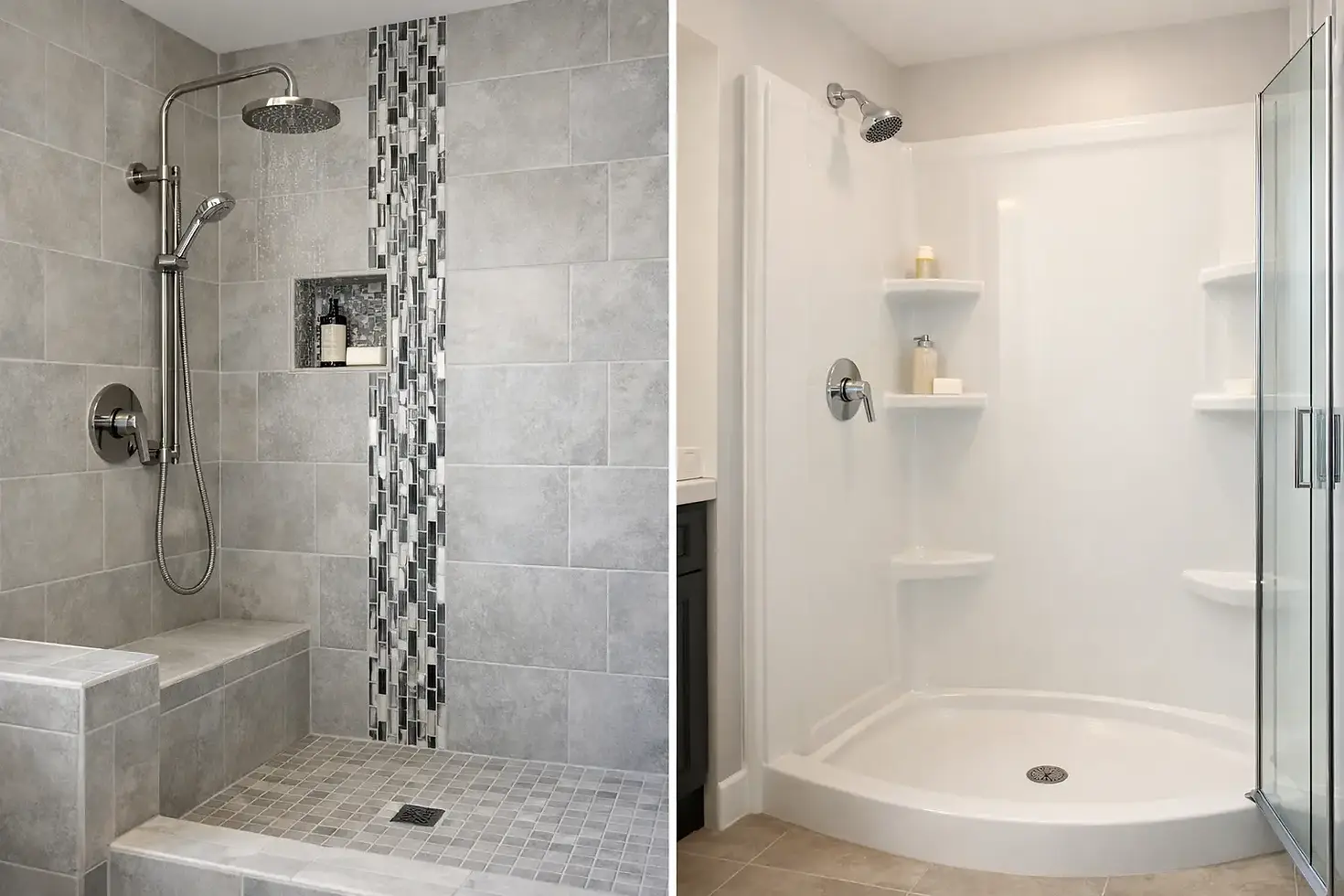
Tile Shower vs Fiberglass Surround
- Emmanuil Lazurko
- May 30
- 6 min read

If you are planning a bathroom remodel, the tile shower vs fiberglass surround decision affects more than appearance. It changes your budget, cleaning routine, repair options, and how the bathroom holds up over time. Homeowners around Portland often start with style in mind, but the better choice usually comes down to how long you plan to stay, how much maintenance you want, and whether you care more about lower upfront cost or long-term value.
Tile shower vs fiberglass surround: the real difference
At a glance, fiberglass wins on simplicity. It is faster to install, usually costs less, and gives you a clean, functional shower without much design work. For a guest bath, rental property, or a quick update on a tighter budget, that can make sense.
Tile is a different category. A properly built tile shower is more custom, more durable in the right hands, and far more flexible in design. It can fit the exact size and layout of your bathroom, and it gives a finished look that fiberglass usually cannot match. But tile is not a shortcut product. It depends heavily on prep, waterproofing, and installation quality.
That last point matters. A cheap fiberglass surround is still a cheap fiberglass surround, but a poorly built tile shower can become a serious problem. If the substrate, waterproofing, slope, or grout work is done wrong, you are not just dealing with cosmetics. You can end up with moisture damage behind the walls or under the floor.
Cost: where most homeowners start
For many homeowners, budget is the first filter. Fiberglass surrounds almost always cost less upfront than a full tile shower. The material itself is more affordable, and installation tends to be faster and less labor-intensive. In some remodels, that shorter timeline also reduces overall disruption.
Tile costs more because the system is more involved. There is demolition, surface prep, waterproofing, layout work, setting tile, grouting, sealing if needed, and detail work around niches, benches, curbs, and plumbing penetrations. Labor is a major part of the cost because good tile work is skilled work.
Still, lower upfront cost does not always mean better value. If you plan to stay in your home for years, a well-built tile shower often makes more sense than installing a fiberglass unit that looks dated sooner or needs replacement earlier. On the other hand, if you need a practical solution for a secondary bathroom and want to keep the project lean, fiberglass may be the smarter move.
Appearance and design flexibility
This is where tile clearly pulls ahead. Tile gives you control over size, pattern, color, finish, and overall style. You can build a simple, clean shower with large-format white tile, or go more architectural with contrast grout, a niche, a bench, or a custom pan. In older homes, tile also makes it easier to work with uneven walls and non-standard dimensions.
Fiberglass is more limited. There are different colors, panel styles, and some units try to mimic tile, but the finished result is still a manufactured surround. It does the job, but it rarely looks custom. In a higher-end primary bathroom, that difference is obvious.
For homeowners who care about resale appeal, this matters. A tile shower tends to feel more permanent and more premium. It can elevate the entire bathroom when the design is restrained and the installation is clean. Fiberglass usually reads as basic, even when it is new.
Durability depends on build quality
A fiberglass surround can last for years, especially in a lightly used bathroom. It resists moisture well because there are fewer seams, and that makes it fairly straightforward from a water-management standpoint. But fiberglass is not invincible. It can scratch, dull, crack, or flex over time, especially with lower-grade products or poor installation.
Tile has stronger long-term potential, but only when the assembly behind it is done correctly. The tile itself is not the waterproof layer. The waterproofing system underneath is what protects the structure. If that part is rushed or skipped, the shower can fail long before the tile surface shows obvious issues.
That is why craftsmanship matters so much with tile. A shower should not just look straight and clean on day one. It needs proper backing, waterproofing, slope, transitions, and finishing details that hold up after years of daily use. When those standards are met, tile is hard to beat for long-term performance.
Cleaning and maintenance
Fiberglass usually wins on low maintenance. The smooth surface is easy to wipe down, and there are fewer grout lines to scrub. For busy households or homeowners who want the easiest cleaning routine possible, that is a real advantage.
Tile requires more attention. Grout lines collect soap residue, and some tile surfaces show water spots more than others. Maintenance is not necessarily difficult, but it is more involved. The amount of upkeep also depends on the type of tile, grout color, and finish you choose. Large-format tile with minimal grout lines is easier to maintain than small mosaic patterns with a lot of joints.
There is also a quality difference in how tile ages. A professionally installed tile shower can keep looking sharp for a long time if it is cleaned regularly and the materials were chosen well. Fiberglass may be easier day to day, but it can start to look worn in a way that is hard to restore.
Repairs are not equal
When fiberglass gets damaged, repairs can be tricky. Small issues may be patchable, but color matching and finish consistency are not always easy. In many cases, once the surround is cracked or badly worn, replacement is the cleaner option.
Tile is more repairable in theory because individual tiles or sections can sometimes be replaced. In practice, it depends on whether matching tile is still available and whether the damage is surface-level or tied to a deeper waterproofing problem. Cosmetic tile issues are one thing. Structural or moisture-related failures are another.
This is one reason it pays to build the shower correctly the first time. A rushed install may look fine at handoff, but hidden problems are expensive later.
What makes sense for Portland-area homes
In the Portland area, moisture management is always worth taking seriously. That does not mean fiberglass is automatically better or tile is automatically risky. It means the installation standard matters. Bathrooms deal with daily humidity, water exposure, and repeated temperature changes. Materials alone do not prevent problems. Proper prep does.
In many primary bathroom remodels, tile is the better fit because homeowners want a more finished look and longer service life. In hall baths, basement baths, or straightforward updates where budget and speed matter most, fiberglass can still be a practical choice.
A lot comes down to the role of the bathroom. If this is the main shower you use every day, investing in tile often delivers a better experience and better visual impact. If it is a backup bathroom that needs to be clean, functional, and cost-conscious, fiberglass may check the right boxes.
Which option adds more value?
If your goal is the strongest visual upgrade and the best chance of adding appeal to the home, tile usually has the edge. Buyers tend to notice custom finishes, and a well-designed tile shower can make the whole bathroom feel more current and more solidly built.
That said, value is not just about what looks expensive. A clean, professionally installed fiberglass surround is better than a poorly executed tile job every time. Homeowners are not impressed by crooked lines, weak detailing, or signs of moisture trouble. Good workmanship matters more than ambitious material choices.
For clients who want durable results and a bathroom that feels finished, ELI Construction generally sees tile as the stronger long-term investment when the budget allows for proper installation. But there is no one-size-fits-all answer. The right choice depends on the bathroom, the house, and your priorities.
How to decide without regretting it
If you want the shortest path to a functional shower with less maintenance and lower initial cost, fiberglass is hard to argue against. It is practical, predictable, and efficient.
If you want a shower that looks custom, fits your space better, and brings more long-term design value, tile is usually worth the extra investment. Just make sure the contractor treats waterproofing, prep, and finish work as non-negotiable parts of the job.
The best remodel decisions are not based on what is cheapest today or what looks best in a photo. They are based on how the shower will perform in your home, with your budget, and for the way you actually live. Pick the option that fits those realities, and you will be much happier with the result years from now.


Comments