
Tile Installation Contractor Portland Homeowners Trust
- Emmanuil Lazurko
- May 19
- 6 min read

A bad tile job usually looks fine for the first week. Then the grout starts cracking, the lines look uneven in daylight, water finds its way where it should not, and the whole project feels cheaper than it should. That is why choosing the right tile installation contractor Portland homeowners rely on is less about finding the lowest bid and more about finding a crew that knows how to build for durability, moisture control, and clean finish work.
Tile is one of the most visible surfaces in a home. In a shower, on a kitchen backsplash, or across a bathroom floor, it has to do two jobs at once. It needs to look sharp, and it needs to hold up under daily use. If either side gets ignored, the finished result will disappoint you long after the installer has left.
What a tile installation contractor in Portland should actually handle
A professional tile project starts well before the first tile is set. Surface preparation, layout planning, product selection, and moisture protection matter just as much as the tile itself. Homeowners often focus on color, shape, and pattern. Those choices matter, but the quality of the installation depends on what is underneath.
For bathroom floors and showers, the substrate has to be stable, flat, and appropriate for wet conditions. In kitchens, backsplashes need accurate spacing, clean edge details, and proper cuts around outlets, cabinets, and windows. On floors, transitions to adjacent rooms need to be planned so the installation feels intentional instead of patched together.
A reliable contractor should also be able to explain the process in plain language. That includes demolition if needed, prep work, waterproofing where required, tile layout, grout selection, caulking, cleanup, and realistic timing. If a contractor cannot clearly explain how the work will be done, that is usually a warning sign.
Why Portland homes need careful tile installation
Portland homes are not all built the same, and that affects tile work more than many homeowners expect. Older homes often come with uneven subfloors, walls that are out of plumb, and previous remodels that left behind questionable materials. Newer homes can present a different challenge, where speed-built construction leaves surfaces needing correction before finish materials go in.
Moisture is another factor. In bathrooms, laundry areas, and entry spaces, the installation has to be built to resist water intrusion over time. That means the work cannot stop at making it look level from across the room. Proper waterproofing details, movement joints where needed, and the right setting materials all play a role in whether the tile still performs years later.
This is where experience matters. A tile installer who works in the Portland area understands the kinds of structural quirks and moisture conditions local homes can present. The best results come from contractors who expect those issues and plan for them instead of trying to hide them.
The difference between a clean tile job and a shortcut job
Most homeowners can spot sloppy tile work once they know what to look for. Uneven spacing, lippage between adjacent tiles, crooked lines, rough cuts, smeared grout, and messy corners all signal rushed execution. In wet areas, the bigger problems are often hidden. Poor waterproofing, weak prep, or the wrong materials can lead to damage that stays invisible until the repair is expensive.
A clean tile job has consistency. The layout is balanced. Cuts are positioned where they make sense. Grout joints are uniform. Trim details are neat. Transitions are finished properly. The room feels tighter and more deliberate because the work was measured, planned, and executed with discipline.
Shortcut work usually shows up in predictable ways. The installer may tile over surfaces that should have been corrected first. They may skip waterproofing steps, rush dry times, or leave the site dirty at the end of each day. The bid may look attractive, but the result often costs more once failures show up.
Where homeowners see the biggest difference in tile quality
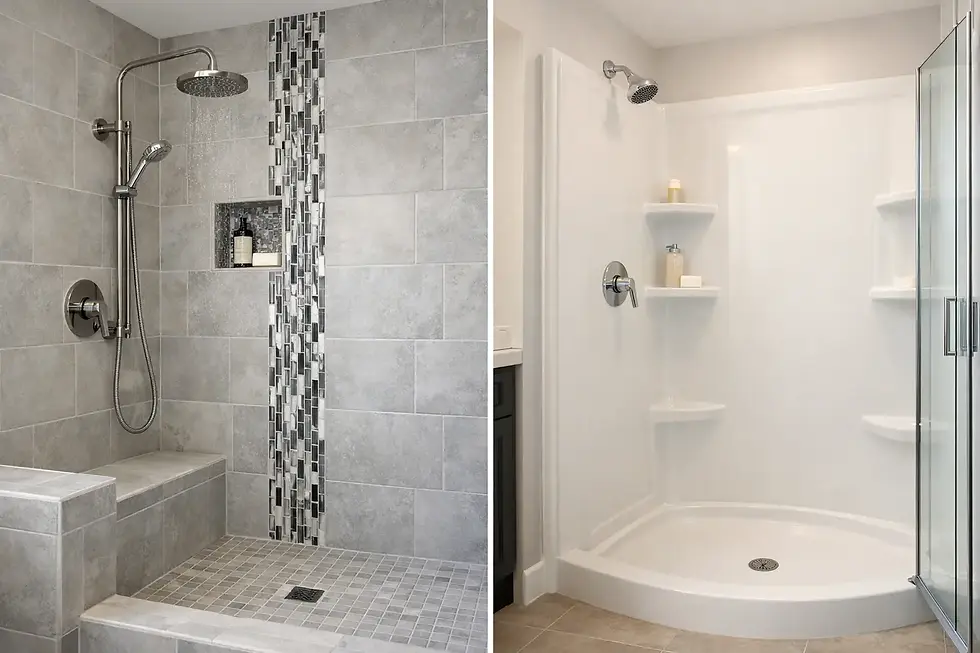
Bathrooms are where craftsmanship shows fastest. Shower walls need a clean layout and proper waterproofing behind the finished surface. Niches, benches, corners, and valve openings all require precision. These are not areas where rough work can be hidden.
Kitchen backsplashes also reveal the difference between average and professional installation. Tile has to align well with countertops, upper cabinets, and outlet locations. Small mistakes stand out immediately because the backsplash sits at eye level and gets seen every day.
Floor tile demands a different kind of discipline. The base surface must be flat enough to support the tile without movement. If it is not, cracks and uneven edges are more likely over time. Entryways, bathrooms, and laundry rooms need especially careful attention because water, foot traffic, and cleaning all put stress on the finished surface.
How to evaluate a tile installation contractor Portland homeowners are considering
Start with the contractor's process, not just the gallery photos. Good-looking photos matter, but they do not tell you how the project was built. Ask what prep is included, how wet areas are waterproofed, what materials are used, and how the crew handles protection and cleanup. Serious contractors answer these questions directly.
It also helps to pay attention to how the estimate is presented. A professional contractor tends to be clear about scope, realistic about timing, and specific about what is included. Vague bids often lead to change orders, confusion, or lowered standards once the work begins.
Communication matters just as much as technical skill. Homeowners want to know when the project starts, what to expect each day, and how issues will be handled if something hidden is uncovered. A contractor who communicates well before the job begins is more likely to stay organized during the job itself.
If the project involves more than tile alone, such as a shower remodel, drywall repair, trim work, or painting afterward, choosing a contractor with broader remodeling capability can make the process smoother. Coordination improves when the same team understands how the tile work fits into the larger job.
Materials matter, but installation matters more
There is a tendency to spend heavily on tile and assume the final result will take care of itself. In reality, premium tile can still look poor if the install is rushed. Even a modest tile selection can look excellent when the layout is sharp and the finish work is clean.
That said, materials still matter. The right underlayment, setting products, grout, sealants, and trim components all affect long-term performance. The best contractors do not push cheap materials just to lower the bid. They recommend products that match the conditions of the space and the expectations of the homeowner.
There are also trade-offs. Large-format tile can create a modern, clean look, but it often requires flatter walls and floors and more precise installation. Small mosaic tile can add texture and detail, but it involves more grout lines and more labor. Natural stone has a premium appearance, but it may require more maintenance than porcelain or ceramic. A good contractor helps you understand those differences before the work starts.
What a professional tile experience should feel like
The quality of a remodel is not only about the finished surface. It is also about how the project is run. Homeowners should expect punctuality, jobsite protection, clean work habits, and straightforward communication. Dust control, floor protection, and daily cleanup are part of professional service, not optional extras.
That matters even more in occupied homes, where families still need to move through the space. A disciplined crew reduces stress by keeping the site organized and respecting the property. For many homeowners, that professionalism is one of the clearest differences between a premium contractor and a bargain installer.
Companies like ELI Construction have built their reputation around that kind of standard - quality workmanship, clean execution, and honest communication from estimate to completion. That approach tends to attract homeowners who care about durability and do not want to gamble on cheap shortcuts.
When paying more for tile installation makes sense
Not every project needs the most expensive tile or the most complex pattern. But quality installation is one area where cutting corners rarely pays off. If the tile is going into a wet area, a high-traffic floor, or a main living space that affects the look of the home, the workmanship has to be there.
Paying more for a contractor who handles prep correctly, installs cleanly, and stands behind the work usually protects the investment. You get a finished result that looks better on day one and holds up better over time. You also reduce the odds of disruptive repairs later.
A good tile project should feel solid, look balanced, and fit the house like it belongs there. When you choose a contractor with real standards, that is exactly what you should expect. The right result is not flashy hype. It is straight lines, sound construction, a clean site, and work that still looks right long after the grout has cured.
If you are comparing bids right now, slow the process down just enough to ask better questions. The best tile work is not just installed. It is planned, built carefully, and finished with pride.


Comments